Key takeaways
- Smell is the earliest and most reliable sign of hidden mold.
- You can't identify mold species by sight - testing is the only way to confirm black mold.
- Health symptoms that improve when you leave the house point to indoor air quality.
- Mold that returns after cleaning means the moisture source was never fixed.
1. A musty, earthy smell that won't go away
The single most reliable early sign of mold is smell. Mold gives off compounds that produce a damp, earthy, slightly sweet odour - the smell of an old basement or a closed-up cottage. If a room, closet, or basement smells musty even after you've cleaned and aired it out, there's almost certainly active growth somewhere you can't see.
The smell is often strongest near the source, so use your nose to narrow it down. Basements, crawl space hatches, and the backs of closets on exterior walls are common hot spots in Halifax homes.
2. Visible spots and discolouration
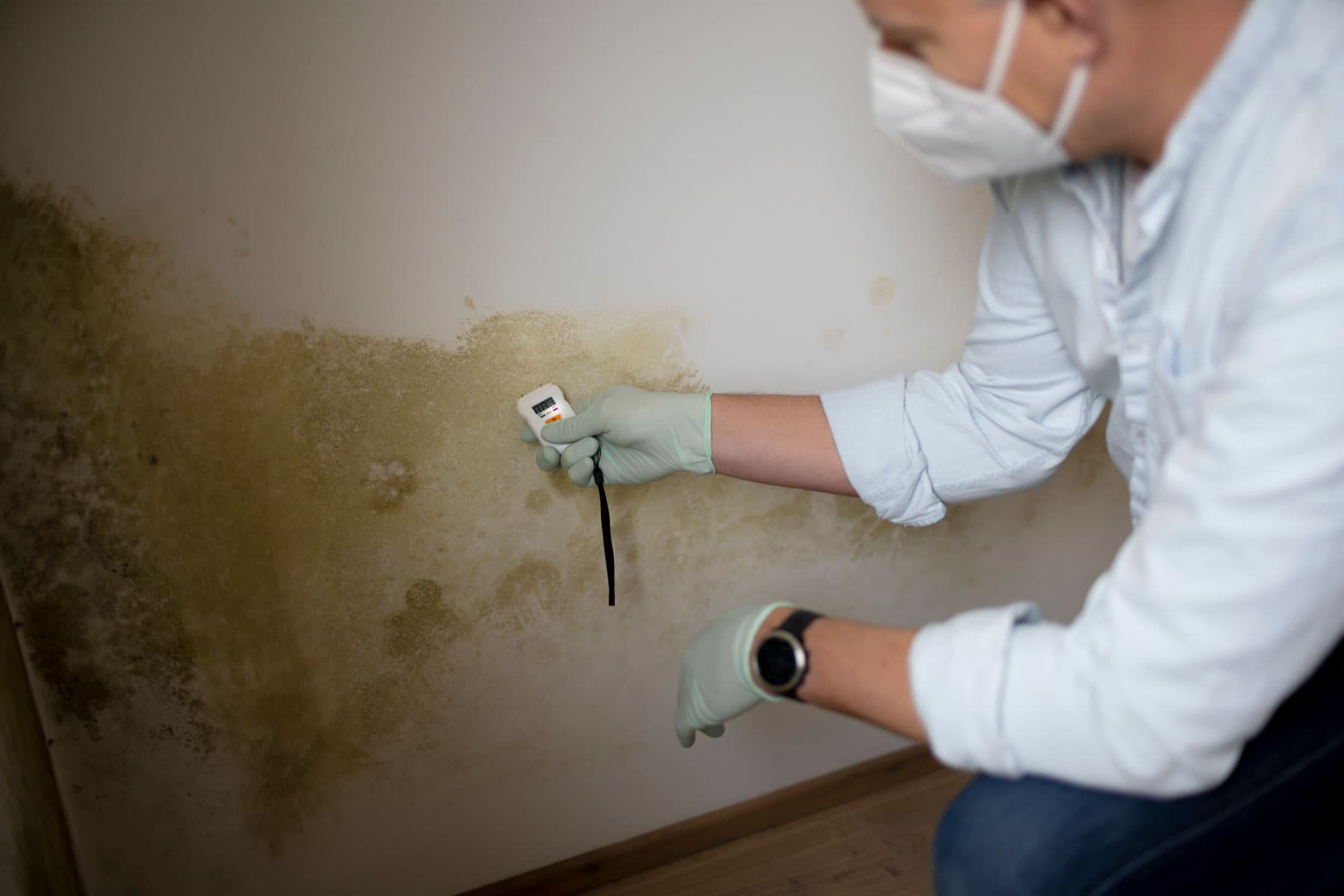
Mold shows up as clusters of black, green, grey, brown, or even pink and orange spots. It can look fuzzy, slimy, or powdery. People often mistake it for dirt or soot, especially along grout lines, on window sills, and where walls meet ceilings.
Not all mold is black mold, and you can't identify the species by eye. If you find growth larger than about a square metre, or you're not sure what it is, it's worth getting it tested and identified before you disturb it.
3. Condensation on windows and walls
Persistent condensation is a moisture warning. When you see water beading on the inside of windows through the winter, or damp patches on exterior walls, the indoor humidity is high enough to feed mold. Halifax's heating season runs long and damp, and homes that don't move air well trap that moisture against cold surfaces.
4. Health symptoms that ease when you leave home
If you or your family have congestion, a runny nose, itchy eyes, coughing, or unexplained fatigue that clears up when you're away from the house for a day or two, mold is a real suspect. Symptoms that track with being home are one of the clearest behavioural clues that your indoor air quality is off.
5. Peeling paint, bubbling, or warped surfaces
Moisture trapped behind a surface pushes paint and wallpaper away from the wall, warps trim, and bubbles drywall. Where there's enough trapped moisture to deform a surface, there's usually enough to grow mold inside the cavity behind it.
6. Dark staining on attic sheathing or rafters
Most Halifax homeowners never set foot in their attic until a roofer, insulation contractor, or home inspector does it for them — and that's usually when attic mold gets discovered. The staining looks like a dark grey or black discolouration on the underside of the roof sheathing and rafters, sometimes fuzzy, sometimes flat. It can cover a small section near a vent or spread across the entire roof deck. By the time it's visible enough to notice, it has almost always been growing for at least one full heating season.
In Halifax, attic mold follows a predictable path. Bathroom and kitchen fans that terminate inside the attic rather than through the roof push warm, moisture-laden air directly onto cold sheathing every time someone showers. Blocked or undersized soffit vents prevent fresh air from entering at the eaves. The result is condensation on cold wood surfaces all winter, and a mold colony that grows steadily in the dark. If your home was built before 2000, there's a meaningful chance your exhaust fans aren't routed correctly. An attic mold assessment is the only way to know what's actually up there.
7. Soft, springy, or sagging floors above a crawl space
If the floor above your crawl space has developed a subtle give underfoot — a softness you didn't notice two or three years ago, or a specific spot that bounces a little — mold is the most likely explanation. The species that thrive in dark, damp crawl spaces include cellulose-digesting organisms that break down wood fibers from the inside. By the time the floor feels wrong from above, the floor joists, sill plates, and beam ends below have typically been degrading for one to five years.
This is one of the most consequential signs on this list because it's structural, not cosmetic. Soft floors don't always get worse quickly, but they don't get better on their own, and the underlying mold continues to consume wood while you wait. In Halifax, crawl spaces are especially vulnerable — the combination of Atlantic humidity, coastal fog, and inadequate or aged vapour barriers keeps moisture levels elevated year-round. A crawl space mold inspection that includes structural wood assessment is the right call if your floors have changed underfoot.
8. A spike in allergy or asthma symptoms indoors, especially in fall and winter
This sign is distinct from the general health symptom discussed in sign four, and the seasonal pattern is the key. When you close the house up for the heating season — typically October in Halifax — you stop diluting indoor air with fresh outdoor air. Whatever is in your living environment, mold spores, mycotoxins, settled dust from growth in cavities, gets recirculated through your HVAC and concentrated. If you or someone in your household starts reacting worse to their asthma or allergies right around the time the heat turns on, and it eases somewhat in summer when windows are open, that seasonal curve is a strong signal.
Mold is not the only trigger for indoor respiratory flare-ups, but it is among the most common and among the least investigated. It's worth noting that this pattern often shows up before any visible sign appears — people assume they've developed a winter allergy when the actual cause is a hidden colony in a wall cavity, basement ceiling, or HVAC duct. If this matches what your household experiences, an indoor air quality assessment with air sampling gives you a concrete answer rather than continued guessing.
9. Water stains on ceilings or walls from a past leak
Old water stains are not just a cosmetic issue — they're a documented record of a moisture event that may never have been properly dried. Drywall, wood framing, and insulation are highly absorbent materials. When a ceiling stain forms, the material behind it absorbed enough water to leave a mineral deposit on the surface. Even if the leak was fixed and the stain dried out, those materials held elevated moisture levels for days or weeks after the surface appeared dry. Forty-eight hours of elevated moisture is all mold needs to establish a colony.
The misleading thing about old stains is that mold established during the wet period can go partially dormant once the material dries, making the area smell normal and look stable. It's still there. It can re-activate when humidity rises, shed spores into the air continuously at low levels, and flare up significantly during the next moisture event. If you have stains from a leak that was never professionally assessed and dried, treat them as an open question rather than resolved history. A mold test with thermal imaging can determine whether active growth remains behind the surface.
10. Rust on nail heads, metal fixtures, or ductwork
Rust requires sustained high humidity to form on indoor metal — typically above 60–70% relative humidity over an extended period. When you start seeing rust streaks on nail heads through drywall, rust on metal duct runs, or corrosion on hardware in a basement or crawl space, it means the ambient humidity in that space has been elevated for long enough to oxidize steel. That same extended high humidity is more than sufficient to grow mold on every wood and paper surface nearby.
This sign gets missed because people assume a little rust is normal in a coastal climate. And at the building exterior, that's true. Inside the building envelope, rust is a humidity alarm. Check nail heads in basement drywall, look at exposed joist hangers and strap ties in the crawl space, and examine any flex or sheet metal ductwork in unconditioned spaces. Rust on those surfaces in an interior environment means moisture levels have been out of range for months, and mold will almost certainly be present on nearby organic materials.
11. Mold returning to the same spot after you've cleaned it
Recurring mold is the clearest diagnostic on this list — it tells you directly that the moisture source was never fixed. If you cleaned mold off a bathroom ceiling and it came back within a few weeks, or scrubbed a basement wall and saw it return by the next season, the mold itself is not the problem. It's a symptom of a moisture condition you haven't resolved: an exhaust fan that isn't moving enough air, a slow leak behind the wall, persistent condensation from cold framing, or a grading issue pushing water against the foundation.
The cleaning itself is often part of why it comes back so reliably. Bleach and household mold sprays kill surface cells on hard materials, but mold on drywall, wood, or grout grows below the surface. The visible portion dies; the root structure — the mycelium — persists in the material and regrows from the same point when conditions allow. Recurring mold in the same location means the underlying cause needs professional assessment and correction, not another round of surface cleaning. At some point the affected material needs to come out and be replaced, and the moisture driving it needs to be identified and stopped. That's the only version of this that doesn't repeat.
Where mold hides in Halifax homes
Mold needs moisture and an organic surface, so it concentrates in the same places again and again: crawl spaces, unfinished basements, attics with poor ventilation, behind bathroom and kitchen walls, under sinks, and inside wall cavities on the weather side of the house.
In older neighbourhoods like the North End and Spryfield, foundation seepage and original vapour barriers are common culprits. In suburban Bedford and Clayton Park, the usual suspects are attic ventilation gaps and crawl space humidity. If the smell or symptoms are there but you can't find the source, that's exactly what a mold inspection with thermal imaging and air sampling is for.
Worried about mold in your Halifax home?
Get a certified assessment with thermal imaging and lab testing. Free written quote, insurance direct billing, clearance testing on every job.
Frequently asked questions
Can I have mold without seeing it?
Yes, and it's common. Mold often grows inside wall cavities, under flooring, in crawl spaces, and in attics long before it's visible. A musty smell or health symptoms with no visible growth is the classic sign of hidden mold, which is exactly what air sampling and thermal imaging are designed to find.
Is a little mold in the bathroom a problem?
A small amount of surface mold on bathroom tile or grout is common and usually manageable with cleaning and better ventilation. The concern is mold larger than about a square metre, mold that keeps coming back, or mold on porous materials like drywall - those point to a moisture problem that needs to be properly addressed.
Should I test for mold or just remove it?
For small, clearly visible surface mold, you can often just clean it and fix the moisture. For larger growth, hidden mold, suspected black mold, or anything tied to health symptoms or an insurance claim, testing first confirms the species and defines the proper scope of removal.