Key takeaways
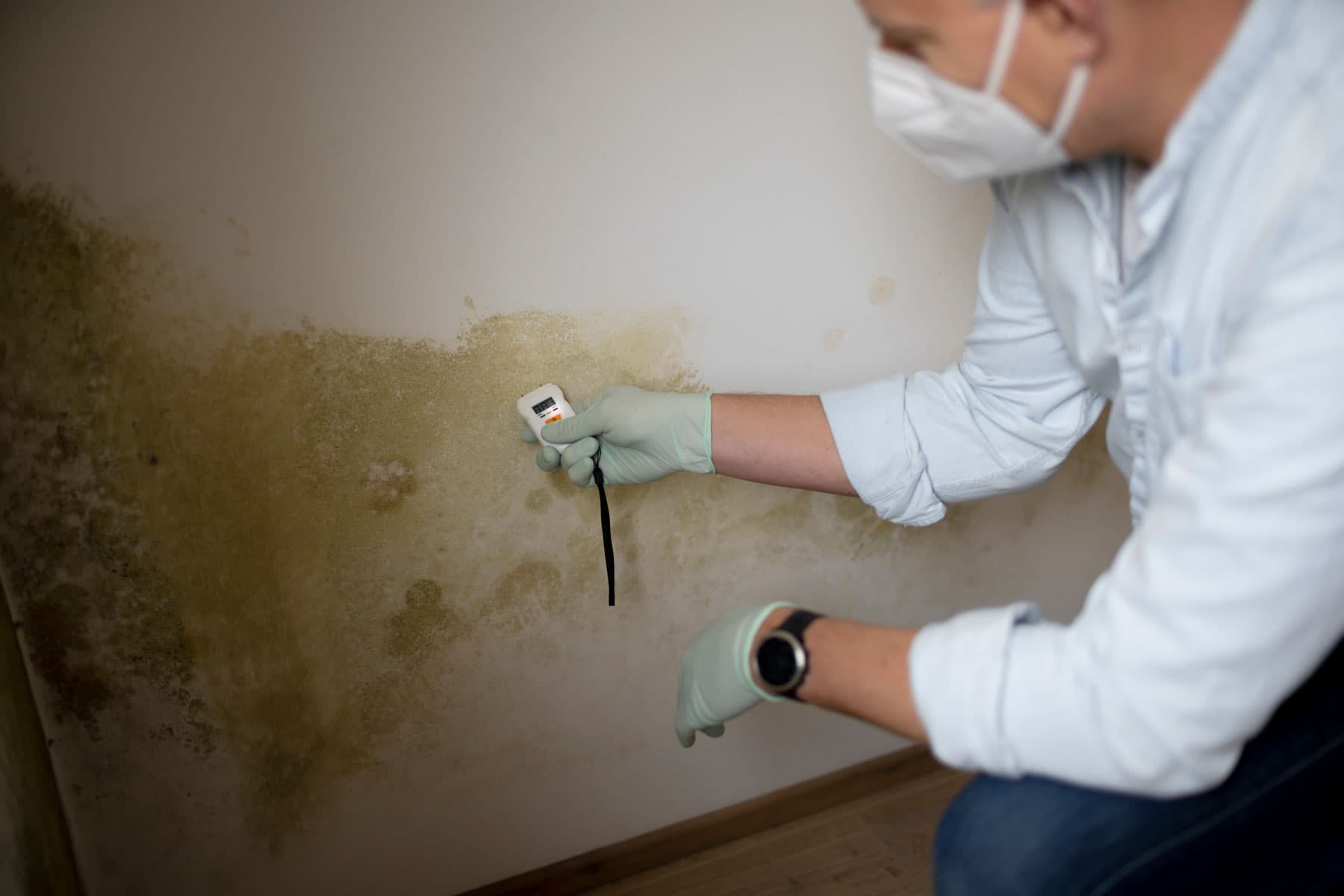
- Bleach kills mold it can touch on hard surfaces. On drywall and wood it mostly bleaches the stain and leaves the colony.
- Mold that returns in the same spot means the moisture source was never fixed.
- Don't use bleach on black mold in drywall, and never mix it with ammonia or vinegar.
- Porous materials, hidden growth, and anything tied to a leak need removal of the material — not another spray.
What bleach actually does to mold
Household bleach (sodium hypochlorite, usually 5–6%) is a surface disinfectant. On glass, tile, metal, and sealed countertops it can kill the mold cells it physically touches, which is why a bathroom tile wipe-down often looks successful the same day.
Bleach is mostly water. On porous materials — drywall paper, unfinished wood, grout, ceiling texture, insulation — the water soaks in and the chlorine stays near the surface. The visible pigment fades, so the spot looks clean. The root structure, the mycelium, is still alive a few millimetres down. Give it a week or two of Halifax humidity and the same spot comes back, often darker than before.
Why the stain comes back in the same place
Recurring mold after a bleach clean is the most common call we get from people who tried to handle it themselves. The pattern is consistent: bathroom ceiling, basement concrete wall, window sill, or the drywall above a shower. The first clean looks perfect. The second clean works for a shorter time. By the third, the stain returns within days.
That cycle happens because bleach never reached the colony and never touched the moisture that is feeding it. Mold is a symptom. If a bathroom fan dumps into the ceiling cavity, a basement wall stays damp, or a slow leak is wetting the back of the drywall, no cleaner on the face of the wall will hold. The material itself often has to come out. That's the difference between wiping a stain and a proper mold remediation.
Where bleach is reasonable — and where it isn't
Bleach is a reasonable first pass only when all three of these are true: the growth is small (well under a square metre), it is on a hard non-porous surface, and you already know and have fixed the moisture source.
- Fine: light mildew on ceramic tile, a glass shower door, a sealed vinyl window frame, or a metal fixture
- Not fine: drywall, ceiling texture, wood framing, baseboards, grout that keeps restaining, carpet, insulation, or anything you can smell but not see
- Never mix bleach with ammonia, vinegar, or other cleaners — the gas is dangerous in a closed bathroom
- Ventilate, wear gloves and eye protection, and don't spray bleach into an HVAC return
Does bleach kill black mold?
It can discolour Stachybotrys on a hard surface. It does not reliably kill black mold growing in drywall or wood, and you cannot tell black mold from ordinary dark mold by looking at it. Stachybotrys needs prolonged wet conditions — a slow leak, a flooded basement that sat, a wall cavity that stayed damp for weeks. Those are exactly the jobs where spraying bleach aerosolizes spores while the colony stays put.
If the growth is dark, slimy, larger than a patch, or sitting on drywall after a leak, stop cleaning it and get it identified. A black mold removal job uses containment and HEPA filtration so spores don't spread through the rest of the house while the wet material is removed.
Basements, bathrooms, and Halifax humidity
Halifax homes give bleach an extra disadvantage. Indoor humidity through the heating season often sits high enough that a wall you "dried" is still above the moisture level mold needs. Coastal fog and 1,400mm of rain keep foundations and north walls damp longer than the stain looks dry.
Bathroom mold on grout and caulking will return until the fan actually exhausts outside and runs long enough after a shower. Bathroom mold removal that only treats the surface, without correcting the fan, is the same failure as bleach — just more expensive. Basement mold on concrete can sometimes be cleaned if the wall is truly dry afterward; mold on furring strips, studs, or finished drywall in a basement almost always means the paper and wood have to go.
What works instead of bleach
For a small hard-surface spot, a detergent wash (soap and water) removes the food source better than bleach, because mold often grows on the soap scum and dust, not the tile itself. Dry the surface completely. Then fix the moisture: fan to the exterior, a dehumidifier holding the basement under 50% relative humidity, or the leak repaired and the wet material dried within 48 hours.
For anything on porous material, hidden behind a wall, larger than about a square metre, tied to health symptoms, or coming back after you've already cleaned it, cleaning products are the wrong tool. Professional removal means containing the area, removing the colonized material, HEPA-vacuuming and treating what can be saved, drying the structure to a measured moisture level, and verifying the air afterward. If you aren't sure which situation you're in, mold testing tells you the species and whether the growth is still active behind the paint.
Worried about mold in your Halifax home?
Get a certified assessment with thermal imaging and lab testing. Free written quote, insurance direct billing, clearance testing on every job.
Frequently asked questions
Does bleach kill mold on drywall?
No, not in any lasting way. Bleach lightens the stain on the paper face of drywall while the water in the bleach soaks in and the living mold stays in the gypsum paper. Drywall that has mold growing on it should be cut out and replaced, and the framing behind it checked for moisture, not sprayed.
Is vinegar better than bleach for mold?
On small hard-surface spots, plain white vinegar can be more useful than bleach because it penetrates a little further and doesn't add as much water. It still will not fix mold inside drywall, wood, or a wall cavity, and it will not fix the leak or humidity that grew the mold. Vinegar is a cleaning step, not remediation.
Why does mold come back after I bleach it?
Because the colony is still in the material and the moisture that fed it is still there. Bleach removed the colour, not the cause. If a bathroom ceiling, basement wall, or window corner restains after cleaning, stop repeating the same clean and have the moisture source found — a fan vented into the attic, a foundation leak, or wet drywall behind the paint are the usual answers in Halifax homes.
When should I stop cleaning and call a professional?
Call when the patch is larger than about a square metre, it's on drywall or wood, you can smell it but can't find it, someone in the house feels worse at home, it followed a leak or flood, or it has already come back after cleaning. Halifax Mold Removal can test it, remove the affected material, and dry the structure so it doesn't return.